


_jpg.png)

St. Petersburg is tightening its fiscal belt, as Mayor Ken Welch’s administration has tasked departmental leaders with submitting proposals for 3% and 5% budget reductions.
Assistant City Administrator Tom Greene began an extensive city council workshop on Thursday by noting that the decreases have helped mitigate the gap between projected revenues and expenses. Residents will also see rates increase on everything from childcare services to stormwater bills in fiscal year 2027, which begins in October.
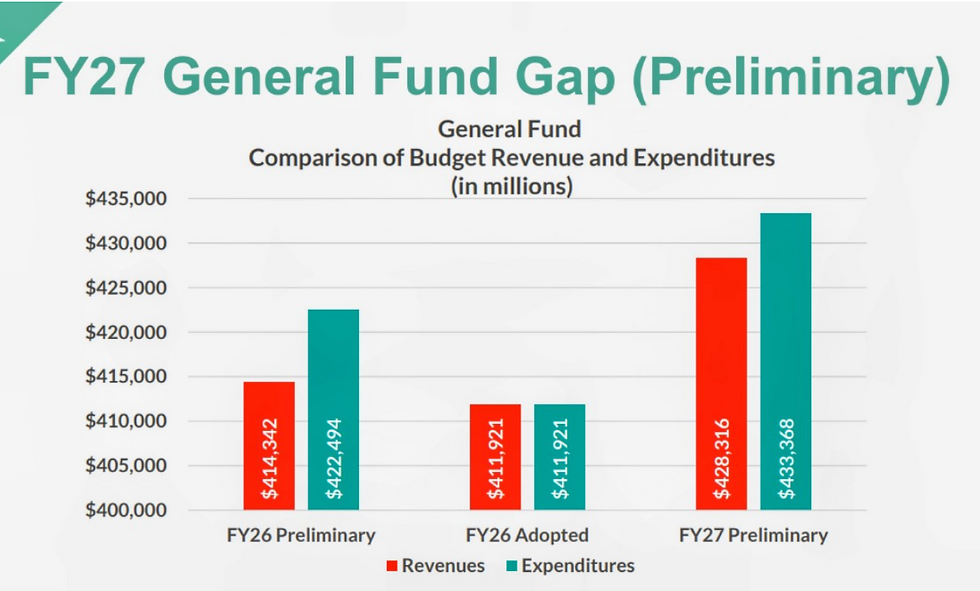
The departmental cuts trimmed the preliminary general fund budget, which pays for all city services, from $444.54 million to $433.37 million. However, that is still 5.21% higher than what was adopted last year, and a $5 million funding gap remains.
“We wanted to look for reductions that didn’t impact service delivery,” Greene said. “Although you might see some vacant positions eliminated, we believe it’s manageable.”
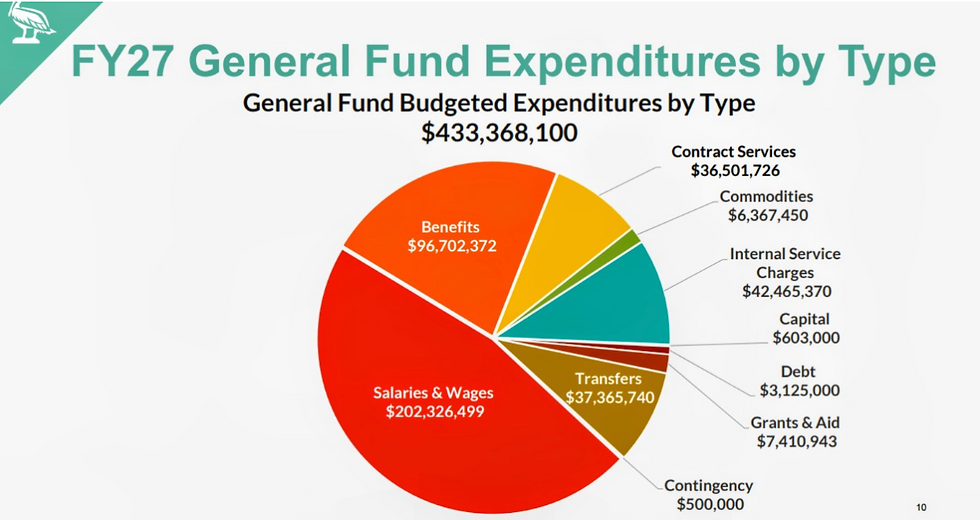
The administration did not receive blowback for the personnel changes. Salaries and wages account for 69% of the city’s general fund budget.
Officials plan to eliminate 19 vacant positions, Greene said, while adding 10 others.
Councilmember Mike Harting called the impact negligible in a city with over 3,000 employees, and noted that “human capital” costs are still increasing by $24.5 million.
“Everything is getting more expensive,” said Liz Makofske, budget director. “Just like in your everyday budget at home, to keep the same budget or the same services and things you have this year, it’s going to cost more next year.”
Councilmember Corey Givens Jr. said municipal rate increases will affect residents citywide, “and the last thing we want to do is blindside people.” He emphasized the need for communication; the city will host public hearings in September before adopting the final budget.
Givens also expressed concern over the amount of money spent on salaries. He believes administrators could identify additional positions for consolidation.
“There are some roles where we have three people getting paid to do the same job,” Givens added. Property taxes support the general fund, and he also questioned what the city would do if the state, as long-discussed, passes legislation that could reduce or eliminate that revenue source this summer.
City Administrator Rob Gerdes said he is not aware of three people performing the same role, and would like to “take a closer look at that.” He also called the budget reductions a “good foreshadowing” of the city’s response to property tax reform.
Gerdes said the city could have made additional cuts that officials will explore “if we get to a more significant situation.” That would likely include workforce reductions, due to the annual cost of salaries, benefits, and pensions.
“The last thing I want to be communicated is that Councilmember Givens wants to take the chopping block to people’s jobs,” Givens added. “What I want to do is make sure we are being good fiscal stewards of taxpayer funds, and that includes making those managerial decisions that we have to make.”
The administration has proposed increasing building permit costs by 25% and implementing a $15 technology fee. People would also pay an additional $1 to $3 to use three municipal golf courses.
Makofske said residents at the city-owned Jamestown Apartments would see a “modest rental rate increase” that reflects market conditions and community upgrades when they renew their leases. A new service that allows residents to rent after-hours meeting rooms at the recently redeveloped Barack Obama Main Library for $110 or $120 per hour will help offset operating costs.
The price to live aboard a vessel at the St. Petersburg Municipal Marina will increase by 10%, and rates for every department housed at the Municipal Services Center downtown will increase by 5%. Hourly parking rates along Central Avenue will increase by 50 cents.

Mike Jefferis, community enrichment administrator, said St. Petersburg hasn’t updated its childcare fees since 2022. He also noted that the city would continue subsidizing costs for families that qualify for free or reduced school lunches.
For example, municipal after-school care for elementary-aged children would increase from $38 to $41 weekly. Those who receive free lunches would pay $14.35, and Jefferis pledged that his department will always work with families who cannot afford the cost.
The city plans to continue offering free services for teens, Jefferis added, and subsidizes the cost for 78% of younger participants in afterschool and summer programs. “Prior to this mayor and council, there was a time when our department would take a 5% increase every year, and that made us very uncomfortable,” he said.
“We take increases to childcare very seriously,” Jefferis continued. “We’re very intentional about those.”
A proposed 6% cut to arts funding was a point of contention for several council members. Gerdes said each city administration had to explore reductions, and the mayor has yet to present his final proposed budget.
Councilmember Deborah Figgs-Sanders shared those concerns and advocated for the Arts Conservatory for Teens (ACT). She said the beneficial program impacts children that “not a lot of organizations can reach.”
“It enhances their artistic skills, and it provides something out of the technology or AI or construction arena, so they can find a beneficial future,” Figgs-Sanders continued. “I can think of some other areas that we can possibly take the money from, that the city wouldn’t notice as much, but a lot of these do impact our youth.”
For more budget information, visit the website here.

Share Your News with Us
To share news with the Power Broker, connect with reachout@powerbrokermagazine.com. To sign up for our twice-weekly e-newsletter, visit www.powerbrokernews.com; and to join our online conversation, subscribe to our YouTube channel at Power Broker Media Group – YouTube