top of page
Screenshot 2026-06-30 at 11.09.03 AM.png

as-decision-looms-will-st-pete-choose-multiple-gas-plant-developers-welch-questions-highlight-com

As decision looms, will St. Pete choose multiple Gas Plant developers? Welch questions highlight competing development strategies

as-decision-looms-will-st-pete-choose-multiple-gas-plant-developers-welch-questions-highlight-com

As decision looms, will St. Pete choose multiple Gas Plant developers? Welch questions highlight competing development strategies

User.webp

by

Mark Parker

June 29, 2026

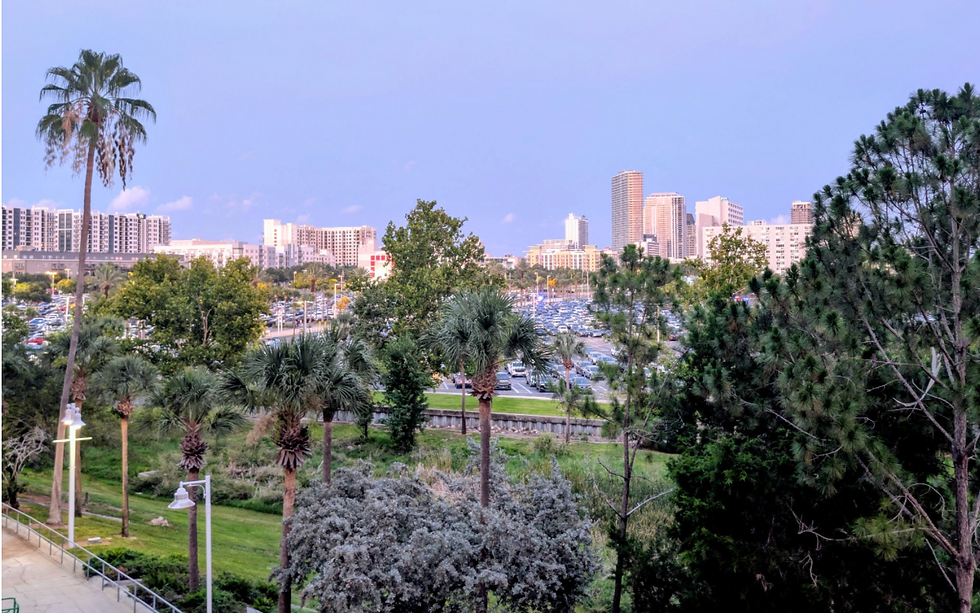
The Historic Gas Plant District currently consists of Tropicana Field and a sea of surface parking lots. Mayor Ken Welch recently posed a series of questions to the development teams competing to reimagine the area.  (Photo by Mark Parker / Power Broker Magazine) 

​Mayor Ken Welch recently received two decidedly different responses to one of several important questions: Are the development teams vying to reimagine the Historic Gas Plant District, currently home to Tropicana Field, willing to split the site?


Answers to that and other questions, which encompass affordable housing plans, a potential lease extension with the Tampa Bay Rays, and several other pertinent aspects, could determine if Welch selects one or more redevelopment proposals in the coming days. While seemingly overlooked, the city’s land disposition announcement stated that interested parties could lease, purchase or develop “all or a portion of the Historic Gas Plant District property.”


“We just want to look at all options and possibilities,” Welch told Power Broker Magazine in early June. “We just want to make sure we’ve got all options available.” 


Responses to Welch’s questions, due on May 29 and subsequently obtained by Power Broker Magazine, show that two of the competing developers  - Ark Ellison Horus and The Burg Bid - were each asked if their teams would “be willing to develop only a portion of the site, such as one-half of the site, if selected?”

The Mayor received two decidedly different answers. One gave a caveated ‘yes.’ The other, a cautious ‘no.’


Ark Ellison Horus


“What makes the plan work is that all of it operates under one master developer platform coordinating execution against a single vision,” replied Ark Ellison Horus. “Beyond that structure, we would not recommend splitting the site, for a reason fundamental to what we're proposing.”

Ark Ellison Horus wrote that its proposal, which prompted Welch to launch the land disposition process, was structured to develop the site under a “single, unified masterplan.” The affordable housing component was a “deliberate exception,” and the city can choose an outside partner to “accelerate that commitment.”

The group notes that proposed community benefits, including public open space, a restored Booker Creek, and workforce development, are not self-funding. Those initiatives rely on cross-subsidization from revenue generated by developing the full site, wrote Ark Ellison Horus.

When two developers share boundaries, align timelines, and hand work off to each other, you get coordination delays, finger-pointing, and gaps in execution,” states the response. “That fragmentation has undermined large redevelopments elsewhere, and it's exactly what a unified team eliminates.”

Ark Ellison Horus leadership, from left: Jonathan Graham, president of Horus Construction; Cathie Wood, founder and CEO of Ark Investment Management; and Rebecca Brown, CEO of spARK Labs by ARK Invest, at a development forum in April. (Photo by Mark Parker / Power Broker Magazine)

Splitting the site would also impact infrastructure implementation, the $140.3 million purchase price “over time,” and accountability for diversity goals, wrote Ark Ellison Horus. “That said, we're here to build what's right for St. Petersburg.”

“If the Mayor and his team see a different path forward, we'll come to the table ready to work through it in good faith,” the group concluded. “But we'd be doing the City a disservice if we weren't direct: this site delivers the most for St. Pete when one team carries the full vision.”

The Burg Bid

St. Petersburg native Thompson Whitney Blake, founder of Blake Investment Partners (BIP), has partnered with the Related Group, a Miami-based development firm, and several local organizations to form The Burg Bid. His $8.1 billion plan is the only other proposal with a predetermined master plan for the entire Gas Plant.

“Yes,” the group succinctly replied to the mayor’s question. “We are willing to develop a portion of the site.”

The Burg Bid noted, however, that splitting the site would impact plans in “thousands of ways,” depending on the size of their allotment, the configuration, and timing. However, the team is “collaborative, and willing to work with the city and the (Tampa Bay) Rays, as needed.”

Welch’s administration received a $275 million cash offer from The Burg Bid, which said its purchasing schedule could “remain a basis for our proposal” if the property is split. Community redevelopment area (CRA) funding and infrastructure costs would “certainly need to be modified,” the group wrote.

The Burg Bid’s response was significantly shorter than Ark Ellison Horus’ explanation. Welch didn’t pose the same question to Forward Vision Partners (FVP).

Foundation Vision Partners

Led by Will Conroy, founder of Backstreets Capital, FVP uniquely proposed a planning and infrastructure-first approach to redeveloping the Gas Plant. The city would retain control of the land, and the group, which includes two members of the previous Rays and Hines development team, would act as an owner’s representative and advisor.

Conroy has repeatedly emphasized  a willingness to incorporate “all the great ideas” from competitors - and their entire teams. He also believes that splitting the site into various parcels would “allow for more participation” from local companies.


Members of the shortlisted development teams vying to reimagine the Historic Gas Plant District, currently home to Tropicana Field, field questions at the forum in April. (Photo by Mark Parker / Power Broker Magazine)

​Welch asked FVP to detail its fee schedule. The group would charge the city $7.4 million in advisory, development management, and construction management fees during the first of three planned construction phases.

The proposal also includes a $67.4 million upfront investment in infrastructure. FVP believes the city would ultimately generate $510 million in land sales and retain $263 million after subtracting project costs.

“We believe we must earn the right to partner with you on future phases by demonstrating real value through Phase 1 execution,” wrote FVP. “Any subsequent phases will remain entirely under the control of the city administration and city council through open, transparent future negotiations.”

Differing affordable housing details


Ark Ellson Horus

Welch also asked the two master plan-focused developers to detail plans for affordable and workforce housing, including income thresholds. Ark Ellison Horus would deliver 446 affordable units, with 130 serving seniors, across two developments during the project’s first phase.

The group, which is willing to incorporate the Pinellas County Housing Authority’s plans for an 80-unit senior housing facility on an adjacent parcel, wrote that the two developments would cater to households earning between 30% and 80% of the area median income (AMI).

Both developments will include a community room with a kitchenette, a swimming pool, a dog park, a fitness center, a business center with a computer lab, and a dedicated art space. The city would receive liquidated damages if affordable and workforce housing units are “delayed, reduced, or not delivered.”

Ark Ellison Horus has proposed a total of 1,925 affordable and workforce housing units. “In the event a financing gap remains after exhausting all available state and federal sources, the city would represent the last dollars into the capital stack,” replied the group when asked if those would require additional subsidies.

“We do not anticipate this request being necessary.”


The Burg Bid

The Burg Bid plans to create 252 affordable and 253 workforce housing units, with an undisclosed number for seniors, across two on-site developments during the project’s first phase. Those would cater to households earning between 22% and 80% of the AMI.

“Features and amenities will be tailored to the needs of each resident demographic and may include fitness centers, computer labs, community rooms, and supportive services offices where appropriate,” wrote the group. “Unit sizes will be determined by market conditions, regulations, and population targets at the time of development.”

The Burg Bid plans to create 1,800 affordable and workforce housing units on-site and another 1,800 off-site. However, the developers could not fully explain how they would secure enough property outside of the Gas Plant to achieve that goal.

Their response noted that an ideal parcel would likely support 50 units, and The Burg Bid currently owns three. However, those are simply examples and not “a commitment to a specific use.”

The Burg Bid is also likely to request financial assistance from the city. “Affordable Housing developments will require subsidy levels commensurate with industry standards for the targeted affordability levels and resident populations,” states the response.

“The team’s approach is to maximize available federal, state, county, private, and non-profit funding sources before utilizing City housing resources.”  


Share Your News

To share news with the Power Broker, connect with reachout@powerbrokermagazine.com. To sign up for our twice-weekly e-newsletter, visit www.powerbrokernews.com, and to join our online conversation, subscribe to our YouTube channel at Power Broker Media Group – YouTube.


.


Most Recent

Jul 3, 2026

‘Exciting win for St. Pete:’ Smithsonian selects Woodson Museum for America 250

Jul 3, 2026

‘Joy and Justice’ tour coming to Florida, Southern Black Girls uplift grassroots philanthropy

Jul 2, 2026

St. Pete mayor selects $8.1 billion concept for the Gas Plant, developers vow economic impact for the community
033894bf-c207-4b00-808a-c69cabef738a.avif
  • Jun 29
  • 6 min read
The Historic Gas Plant District currently consists of Tropicana Field and a sea of surface parking lots. Mayor Ken Welch recently posed a series of questions to the development teams competing to reimagine the area.  (Photo by Mark Parker / Power Broker Magazine) 

​Mayor Ken Welch recently received two decidedly different responses to one of several important questions: Are the development teams vying to reimagine the Historic Gas Plant District, currently home to Tropicana Field, willing to split the site?


Answers to that and other questions, which encompass affordable housing plans, a potential lease extension with the Tampa Bay Rays, and several other pertinent aspects, could determine if Welch selects one or more redevelopment proposals in the coming days. While seemingly overlooked, the city’s land disposition announcement stated that interested parties could lease, purchase or develop “all or a portion of the Historic Gas Plant District property.”


“We just want to look at all options and possibilities,” Welch told Power Broker Magazine in early June. “We just want to make sure we’ve got all options available.” 


Responses to Welch’s questions, due on May 29 and subsequently obtained by Power Broker Magazine, show that two of the competing developers  - Ark Ellison Horus and The Burg Bid - were each asked if their teams would “be willing to develop only a portion of the site, such as one-half of the site, if selected?”

The Mayor received two decidedly different answers. One gave a caveated ‘yes.’ The other, a cautious ‘no.’


Ark Ellison Horus


“What makes the plan work is that all of it operates under one master developer platform coordinating execution against a single vision,” replied Ark Ellison Horus. “Beyond that structure, we would not recommend splitting the site, for a reason fundamental to what we're proposing.”

Ark Ellison Horus wrote that its proposal, which prompted Welch to launch the land disposition process, was structured to develop the site under a “single, unified masterplan.” The affordable housing component was a “deliberate exception,” and the city can choose an outside partner to “accelerate that commitment.”

The group notes that proposed community benefits, including public open space, a restored Booker Creek, and workforce development, are not self-funding. Those initiatives rely on cross-subsidization from revenue generated by developing the full site, wrote Ark Ellison Horus.

When two developers share boundaries, align timelines, and hand work off to each other, you get coordination delays, finger-pointing, and gaps in execution,” states the response. “That fragmentation has undermined large redevelopments elsewhere, and it's exactly what a unified team eliminates.”

Ark Ellison Horus leadership, from left: Jonathan Graham, president of Horus Construction; Cathie Wood, founder and CEO of Ark Investment Management; and Rebecca Brown, CEO of spARK Labs by ARK Invest, at a development forum in April. (Photo by Mark Parker / Power Broker Magazine)

Splitting the site would also impact infrastructure implementation, the $140.3 million purchase price “over time,” and accountability for diversity goals, wrote Ark Ellison Horus. “That said, we're here to build what's right for St. Petersburg.”

“If the Mayor and his team see a different path forward, we'll come to the table ready to work through it in good faith,” the group concluded. “But we'd be doing the City a disservice if we weren't direct: this site delivers the most for St. Pete when one team carries the full vision.”

The Burg Bid

St. Petersburg native Thompson Whitney Blake, founder of Blake Investment Partners (BIP), has partnered with the Related Group, a Miami-based development firm, and several local organizations to form The Burg Bid. His $8.1 billion plan is the only other proposal with a predetermined master plan for the entire Gas Plant.

“Yes,” the group succinctly replied to the mayor’s question. “We are willing to develop a portion of the site.”

The Burg Bid noted, however, that splitting the site would impact plans in “thousands of ways,” depending on the size of their allotment, the configuration, and timing. However, the team is “collaborative, and willing to work with the city and the (Tampa Bay) Rays, as needed.”

Welch’s administration received a $275 million cash offer from The Burg Bid, which said its purchasing schedule could “remain a basis for our proposal” if the property is split. Community redevelopment area (CRA) funding and infrastructure costs would “certainly need to be modified,” the group wrote.

The Burg Bid’s response was significantly shorter than Ark Ellison Horus’ explanation. Welch didn’t pose the same question to Forward Vision Partners (FVP).

Foundation Vision Partners

Led by Will Conroy, founder of Backstreets Capital, FVP uniquely proposed a planning and infrastructure-first approach to redeveloping the Gas Plant. The city would retain control of the land, and the group, which includes two members of the previous Rays and Hines development team, would act as an owner’s representative and advisor.

Conroy has repeatedly emphasized  a willingness to incorporate “all the great ideas” from competitors - and their entire teams. He also believes that splitting the site into various parcels would “allow for more participation” from local companies.


Members of the shortlisted development teams vying to reimagine the Historic Gas Plant District, currently home to Tropicana Field, field questions at the forum in April. (Photo by Mark Parker / Power Broker Magazine)

​Welch asked FVP to detail its fee schedule. The group would charge the city $7.4 million in advisory, development management, and construction management fees during the first of three planned construction phases.

The proposal also includes a $67.4 million upfront investment in infrastructure. FVP believes the city would ultimately generate $510 million in land sales and retain $263 million after subtracting project costs.

“We believe we must earn the right to partner with you on future phases by demonstrating real value through Phase 1 execution,” wrote FVP. “Any subsequent phases will remain entirely under the control of the city administration and city council through open, transparent future negotiations.”

Differing affordable housing details


Ark Ellson Horus

Welch also asked the two master plan-focused developers to detail plans for affordable and workforce housing, including income thresholds. Ark Ellison Horus would deliver 446 affordable units, with 130 serving seniors, across two developments during the project’s first phase.

The group, which is willing to incorporate the Pinellas County Housing Authority’s plans for an 80-unit senior housing facility on an adjacent parcel, wrote that the two developments would cater to households earning between 30% and 80% of the area median income (AMI).

Both developments will include a community room with a kitchenette, a swimming pool, a dog park, a fitness center, a business center with a computer lab, and a dedicated art space. The city would receive liquidated damages if affordable and workforce housing units are “delayed, reduced, or not delivered.”

Ark Ellison Horus has proposed a total of 1,925 affordable and workforce housing units. “In the event a financing gap remains after exhausting all available state and federal sources, the city would represent the last dollars into the capital stack,” replied the group when asked if those would require additional subsidies.

“We do not anticipate this request being necessary.”


The Burg Bid

The Burg Bid plans to create 252 affordable and 253 workforce housing units, with an undisclosed number for seniors, across two on-site developments during the project’s first phase. Those would cater to households earning between 22% and 80% of the AMI.

“Features and amenities will be tailored to the needs of each resident demographic and may include fitness centers, computer labs, community rooms, and supportive services offices where appropriate,” wrote the group. “Unit sizes will be determined by market conditions, regulations, and population targets at the time of development.”

The Burg Bid plans to create 1,800 affordable and workforce housing units on-site and another 1,800 off-site. However, the developers could not fully explain how they would secure enough property outside of the Gas Plant to achieve that goal.

Their response noted that an ideal parcel would likely support 50 units, and The Burg Bid currently owns three. However, those are simply examples and not “a commitment to a specific use.”

The Burg Bid is also likely to request financial assistance from the city. “Affordable Housing developments will require subsidy levels commensurate with industry standards for the targeted affordability levels and resident populations,” states the response.

“The team’s approach is to maximize available federal, state, county, private, and non-profit funding sources before utilizing City housing resources.”  


Share Your News

To share news with the Power Broker, connect with reachout@powerbrokermagazine.com. To sign up for our twice-weekly e-newsletter, visit www.powerbrokernews.com, and to join our online conversation, subscribe to our YouTube channel at Power Broker Media Group – YouTube.


.


bottom of page