top of page
Screenshot 2026-08-10 at 1.38.22 PM.png

black-adults-are-holding-back-on-marriage-and-prioritizing-breaking-toxic-relationship-cycles-instea

Black adults in Pinellas are holding back on marriage and prioritizing breaking toxic relationship cycles instead

black-adults-are-holding-back-on-marriage-and-prioritizing-breaking-toxic-relationship-cycles-instea

Black adults in Pinellas are holding back on marriage and prioritizing breaking toxic relationship cycles instead

User.webp

by

Alexia McKay

August 11, 2026

Caption: An African American couple holding hands. (Stock image)

A quiet demographic shift has been unfolding in Pinellas County for more than two decades, one that mirrors a national pattern but now sets the county apart from other parts of the Tampa Bay region.  Census data, released in early 2026, shows for the first time in measured history, a majority of Black adults in Pinellas have never walked down the aisle.


According to data spanning 2000 to 2024, the share of ‘never married’ Black residents climbed from about 39% in 2000 to just over 50% today — a gain of more than 10.7 percentage points over a quarter century. That makes Pinellas the only one among eight Tampa Bay counties where Black adults who have never married are a majority of the population.


In addition, the increase in the ‘never married’ population was bigger in Pinellas than in other counties in the region. Its 10.7 percentage-point increase since 2000 outpaces the other Tampa Bay counties, ahead of Sarasota (+8.3 points), Hillsborough (+7.9), Manatee (+7.5), Hernando (+7.2), Citrus (+6.7), Polk (+6.3), and Pasco (+5.9).


Within Pinellas, white non-Hispanic residents also saw an increase in the never-married rate. However, two things stand out in comparing the two groups.


One, the uptick was smaller for white residents, from about 20% in 2000 to 26% in 2024 – a six percentage-point climb. And two, African Americans remain twice as likely to be ‘never married, compared to their white neighbors.


The racial gap — now approaching 24 percentage points — is wider today than it was in the year 2000.


The trends are not unique to Pinellas. Across Florida and the country, Black Americans are marrying at rates well below those of white Americans. Florida’s Black population overall shows about 48% never married, compared to roughly 25% for white Floridians.


Data released by the Pew Research Center shows that on a national level, nearly 50% of Black adults have never married.


For Tampa Bay area experts such as Shamika T. Askew, Esq., the owner and managing Attorney of the Law Office of Shamika T. Askew, the results are not surprising. “I don't believe that some of us were properly taught about or observed healthy, loving, and lasting marriages,” says Askew. “Some of us grew up in dysfunctional and broken families, and the media does not portray healthy, whole, and healed families.”


Caption: Pastor Quincy Stratford and his wife Jennifer have been married for over 20 years.  (Photo courtesy of Quincy Stratford)

Pastor Quincy Stratford of Carmel Friendship Church in Wesley Chapel shares the same sentiment. Growing up an 80s and early 90s kid, he recalled his only example of a positive Black family and marriage unit was the Huxtables of The Cosby Show.


“If you think about the shows that shaped the Gen X's and those are the parents of the millennials, who are the parents of the Z's…if you think about those shows, you got shows like Martin, you got shows like Living Single, you have the Fresh Prince of Bel Air, but it was primarily about Will, and so you know the marriage wasn't at center point,” says Stratford. “I don't think we saw much in the media on TV that highlighted the importance of the Black family unit, a husband and wife.”


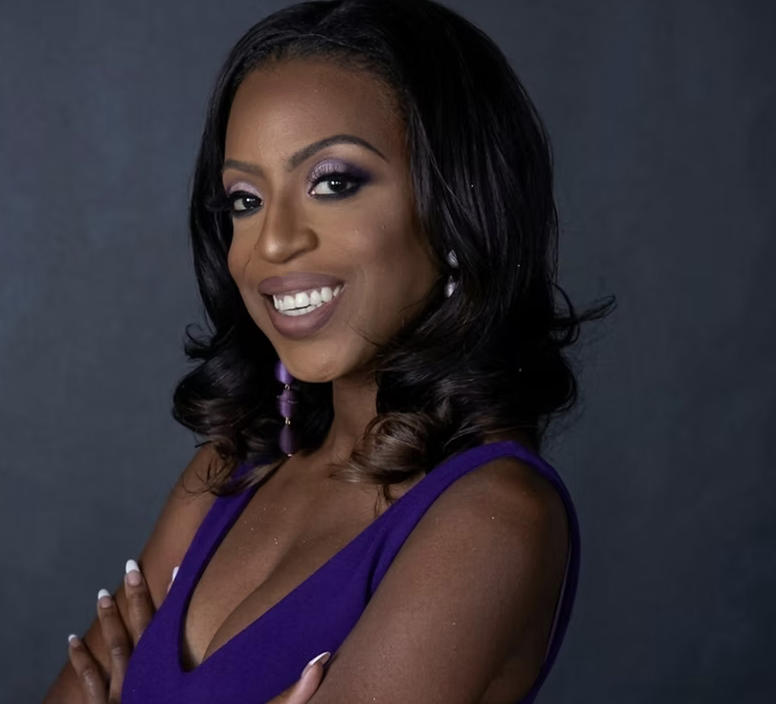
Caption: Shamika T. Askew, Esquire is the Owner and Managing Attorney of the Law Office of Shamika T. Askew. (Photo courtesy of Shamika Askew)

Why marriages fail

Researchers at institutions including the University of North Carolina and the University of California have concluded that while labor market disparities and incarceration clearly play a role, they still don’t fully account for the Black-white gap in marriage formation.


Askew observed that some of the main factors why Black marriages fail include the lack of accountability for any wrongdoing; the lack of mutual respect; and the lack of vision for the family's future.  


“ I strongly believe that we were created for companionship,” says Askew.  “Unfortunately, our trauma and bad relationship experiences have caused us to feel safer and more secure in situationships rather than in long-term commitment.


Stratford also points out that people enter relationships with the wrong mindset. “We have lost our ability to simply be a servant to one another,” he says. “I think we like the thought of marriage, and we like the idea of marriage, but we struggle doing the things associated with the maintenance of the marriage.”


Caption: Kacey L. Jenkins, PhD, LMFT, PMH-C, EMDRIA Certified Therapist (Photo courtesy of Kacey Jenkins)

Marital instability can also have a lasting impact.


According to a peer-reviewed study in the Journal of Family Psychology, shared by Kacey L. Jenkins, PhD, LMFT, PMH-C, an EMDRIA Certified Therapist, adults who grew up in divorced households entered their own relationships with significantly lower commitment and lower confidence in marital success.


“Although Black adults may be exposed to higher rates of marital instability than other groups, research shows that the relational instability does not push Black adults into romantic partnerships, but instead leads to a delay in formal marriage with individuals relying more heavily on being single or their extended family networks, which results in less risk of an early divorce,” says Jenkins.


Yet those findings do not mean people are dodging the aisle altogether. Jenkins says in her practice, specifically in the southeastern U.S., clients are not rejecting marriage. Instead, she says people are just waiting longer to tie the knot and break toxic cycles.  “It's clients in their mid-thirties to late forties who genuinely want long-term partnerships, family, and children, but haven't found their right fit yet,” says Jenkins.


According to Jenkins, Gallup's research found Black Americans maintain a high regard for the institution of marriage. “So this isn't about not valuing love or partnership. It's about navigating very real structural and relational barriers that researchers describe as an interconnected matrix of sociological and psychological constraints, including documented partner availability gaps, employment disparities, and the accumulated weight of systemic stress on Black relationships.”


Caption: Pastor Quincy with wife Jennifer spending time together at the gym. (Photo credit: Quincy Stratford)

Breaking toxic cycles 

The desire to break those toxic cycles is a drive for many Black couples. Licensed family and marriage therapist April Lancit of April Lancit & Associates found that many Black adults are increasingly prioritizing healthy relationships over simply achieving the milestone of marriage.


“There is growing awareness around self-care, self-love, trauma, attachment, and emotional well-being,” says Lancit. “People are developing a deeper understanding of how intergenerational trauma, chronic stress, and unresolved family issues can impact relationships.”


Caption: April Lancit of April Lancit & Associates

Lancit continued, “As a result, many individuals are being more selective about who they choose to build a life with. They recognize that entering a relationship with someone who has not addressed their own emotional wounds can create significant challenges. For some, the pursuit of peace, personal growth, and purpose has become more important than being in a relationship for the sake of companionship alone.”


However, the pursuit of self-improvement is not as straight-and-narrow as booking an appointment with your local counselor.  A study from the National Institutes of Health shows that African American couples seldom turn to couples therapy. Instead, they seek informal counseling from friends, family members, and the church.


There is also an education dimension. As Black women have made substantial educational gains in recent decades, a growing mismatch in educational attainment between Black men and women has complicated the traditional pathway to marriage, creating challenges in dating. According to Lancit’s clinical research, many Black men have expressed feelings of inadequacy or emasculation when they perceive that they are unable to contribute financially at the same level as their partners. Conversely, many Black women report carrying a greater share of the emotional, mental, and relational labor within relationships.


“The issue is not simply about income or education; it is about how societal expectations, identity, gender socialization, and power dynamics intersect within relationships,” says Lancit. “These realities can influence how Black men and women perceive themselves, evaluate potential partners, and navigate long-term commitment and marriage.”


Photo caption: A man puts an engagement ring on woman's finger. (Stock image)

The church’s role still matters  

As Black adults rethink traditional paths to marriage, faith leaders say the church still has an important role to play, but that role may also need to evolve. Pastor Stratford has been married for 26 years and is the father of five children. While he believes deeply in the sacredness of marriage (over 80% of his congregation is married), he also believes churches can do a better job at serving people who are not married rather than making matrimony part of spiritual success.


“One thing the church has been guilty of is that we have made marriage the goal,” he says. “When some people have the gift of singleness, some people don't want to be married, some people don't want to be remarried, some people are widowed or widower.”


He added, “I do believe that there is much room for improvement for the church as a whole, and particularly our church, to love singles better and to help them walk out a full and a whole life with God by themselves.”


Partnership outside traditional marriage 

On the other hand, researchers are also careful not to conflate not marrying with not partnering or not parenting. Many Black adults form families, raise children, and maintain long-term relationships outside the legal institution of marriage. Jenkins observed a rise in cohabitation and that having a baby no longer comes with an expectation of marriage.


“People are building their lives, sharing households, and raising children together without formalizing it legally,” Jenkins said. “Some of them desire the marriage license and some don't express the experience of not being legally married as a deficit. I also hear more people in the consideration phase  thinking through what family formation looks like for them outside of traditional marriage timelines.”


Local initiatives such as the federally funded Figuring it Out for the Child Program at USF’s Family Study Centers support parents in this scenario, specifically single Black parents who share a child. Each parent is paired with a specialist who stays with them from the start of pregnancy until the child’s first birthday. The program works with local community partners such as churches and the Florida Department of Health Pinellas County.


Dr. James McHale is the Founding Chair of the Department of Psychology at USF St. Petersburg and one of the lead researchers of the Figuring Out Program. He shares with Power Broker Magazine via email that although the observation on whether parents were together or not was not the focus of their research, results of a ‘randomized controlled trial’ showed that it was extremely beneficial for coparents to collectively figure it out for their child.


“Those who took part in the intervention program showed better coparenting, greater father involvement, and better infant mental health than the coparents who received existing Pinellas County support services for pregnant and parenting families only,” says McHale.


Marriage still desired 

Despite shifting timelines and changing relationship dynamics, experts say one thing has remained remarkably consistent: marriage itself has not lost its appeal. Instead, today’s Black adults are approaching it more intentionally and strategically, determined not to fall into the unhealthy relationship patterns and trauma as their predecessors.


A Pew survey showed that Black men were 36% more likely to be married. The question is: Are people willing to do the work?


The most honest thing I can say about marriage is that it requires significant, sustained effort and commitment,” says Jenkins. “You are going to enter into marriage; you have to be willing to push through the hardships instead of looking for an exit and invest in the relationship early with premarital counseling.  Increase your chances of building something healthy and lasting by being prepared for what's to come in the next season because  the desire for connection, for partnership, and for family is valid and worthy of investment.”


Most Recent

Aug 20, 2026

From community law to AI: Trailblazing attorney forges new paths in Tampa

Aug 19, 2026

Crist vs. Welch: A fight to unify the electorate, and key primary results

Aug 18, 2026

Decision day pulse: St. Pete mayoral candidates reflect as polls open
033894bf-c207-4b00-808a-c69cabef738a.avif
  • Aug 11
  • 8 min read

Updated: Aug 12

Caption: An African American couple holding hands. (Stock image)

A quiet demographic shift has been unfolding in Pinellas County for more than two decades, one that mirrors a national pattern but now sets the county apart from other parts of the Tampa Bay region.  Census data, released in early 2026, shows for the first time in measured history, a majority of Black adults in Pinellas have never walked down the aisle.


According to data spanning 2000 to 2024, the share of ‘never married’ Black residents climbed from about 39% in 2000 to just over 50% today — a gain of more than 10.7 percentage points over a quarter century. That makes Pinellas the only one among eight Tampa Bay counties where Black adults who have never married are a majority of the population.


In addition, the increase in the ‘never married’ population was bigger in Pinellas than in other counties in the region. Its 10.7 percentage-point increase since 2000 outpaces the other Tampa Bay counties, ahead of Sarasota (+8.3 points), Hillsborough (+7.9), Manatee (+7.5), Hernando (+7.2), Citrus (+6.7), Polk (+6.3), and Pasco (+5.9).


Within Pinellas, white non-Hispanic residents also saw an increase in the never-married rate. However, two things stand out in comparing the two groups.


One, the uptick was smaller for white residents, from about 20% in 2000 to 26% in 2024 – a six percentage-point climb. And two, African Americans remain twice as likely to be ‘never married, compared to their white neighbors.


The racial gap — now approaching 24 percentage points — is wider today than it was in the year 2000.


The trends are not unique to Pinellas. Across Florida and the country, Black Americans are marrying at rates well below those of white Americans. Florida’s Black population overall shows about 48% never married, compared to roughly 25% for white Floridians.


Data released by the Pew Research Center shows that on a national level, nearly 50% of Black adults have never married.


For Tampa Bay area experts such as Shamika T. Askew, Esq., the owner and managing Attorney of the Law Office of Shamika T. Askew, the results are not surprising. “I don't believe that some of us were properly taught about or observed healthy, loving, and lasting marriages,” says Askew. “Some of us grew up in dysfunctional and broken families, and the media does not portray healthy, whole, and healed families.”


Caption: Pastor Quincy Stratford and his wife Jennifer have been married for over 20 years.  (Photo courtesy of Quincy Stratford)

Pastor Quincy Stratford of Carmel Friendship Church in Wesley Chapel shares the same sentiment. Growing up an 80s and early 90s kid, he recalled his only example of a positive Black family and marriage unit was the Huxtables of The Cosby Show.


“If you think about the shows that shaped the Gen X's and those are the parents of the millennials, who are the parents of the Z's…if you think about those shows, you got shows like Martin, you got shows like Living Single, you have the Fresh Prince of Bel Air, but it was primarily about Will, and so you know the marriage wasn't at center point,” says Stratford. “I don't think we saw much in the media on TV that highlighted the importance of the Black family unit, a husband and wife.”


Caption: Shamika T. Askew, Esquire is the Owner and Managing Attorney of the Law Office of Shamika T. Askew. (Photo courtesy of Shamika Askew)

Why marriages fail

Researchers at institutions including the University of North Carolina and the University of California have concluded that while labor market disparities and incarceration clearly play a role, they still don’t fully account for the Black-white gap in marriage formation.


Askew observed that some of the main factors why Black marriages fail include the lack of accountability for any wrongdoing; the lack of mutual respect; and the lack of vision for the family's future.  


“ I strongly believe that we were created for companionship,” says Askew.  “Unfortunately, our trauma and bad relationship experiences have caused us to feel safer and more secure in situationships rather than in long-term commitment.


Stratford also points out that people enter relationships with the wrong mindset. “We have lost our ability to simply be a servant to one another,” he says. “I think we like the thought of marriage, and we like the idea of marriage, but we struggle doing the things associated with the maintenance of the marriage.”


Caption: Kacey L. Jenkins, PhD, LMFT, PMH-C, EMDRIA Certified Therapist (Photo courtesy of Kacey Jenkins)

Marital instability can also have a lasting impact.


According to a peer-reviewed study in the Journal of Family Psychology, shared by Kacey L. Jenkins, PhD, LMFT, PMH-C, an EMDRIA Certified Therapist, adults who grew up in divorced households entered their own relationships with significantly lower commitment and lower confidence in marital success.


“Although Black adults may be exposed to higher rates of marital instability than other groups, research shows that the relational instability does not push Black adults into romantic partnerships, but instead leads to a delay in formal marriage with individuals relying more heavily on being single or their extended family networks, which results in less risk of an early divorce,” says Jenkins.


Yet those findings do not mean people are dodging the aisle altogether. Jenkins says in her practice, specifically in the southeastern U.S., clients are not rejecting marriage. Instead, she says people are just waiting longer to tie the knot and break toxic cycles.  “It's clients in their mid-thirties to late forties who genuinely want long-term partnerships, family, and children, but haven't found their right fit yet,” says Jenkins.


According to Jenkins, Gallup's research found Black Americans maintain a high regard for the institution of marriage. “So this isn't about not valuing love or partnership. It's about navigating very real structural and relational barriers that researchers describe as an interconnected matrix of sociological and psychological constraints, including documented partner availability gaps, employment disparities, and the accumulated weight of systemic stress on Black relationships.”


Caption: Pastor Quincy with wife Jennifer spending time together at the gym. (Photo credit: Quincy Stratford)

Breaking toxic cycles 

The desire to break those toxic cycles is a drive for many Black couples. Licensed family and marriage therapist April Lancit of April Lancit & Associates found that many Black adults are increasingly prioritizing healthy relationships over simply achieving the milestone of marriage.


“There is growing awareness around self-care, self-love, trauma, attachment, and emotional well-being,” says Lancit. “People are developing a deeper understanding of how intergenerational trauma, chronic stress, and unresolved family issues can impact relationships.”


Caption: April Lancit of April Lancit & Associates

Lancit continued, “As a result, many individuals are being more selective about who they choose to build a life with. They recognize that entering a relationship with someone who has not addressed their own emotional wounds can create significant challenges. For some, the pursuit of peace, personal growth, and purpose has become more important than being in a relationship for the sake of companionship alone.”


However, the pursuit of self-improvement is not as straight-and-narrow as booking an appointment with your local counselor.  A study from the National Institutes of Health shows that African American couples seldom turn to couples therapy. Instead, they seek informal counseling from friends, family members, and the church.


There is also an education dimension. As Black women have made substantial educational gains in recent decades, a growing mismatch in educational attainment between Black men and women has complicated the traditional pathway to marriage, creating challenges in dating. According to Lancit’s clinical research, many Black men have expressed feelings of inadequacy or emasculation when they perceive that they are unable to contribute financially at the same level as their partners. Conversely, many Black women report carrying a greater share of the emotional, mental, and relational labor within relationships.


“The issue is not simply about income or education; it is about how societal expectations, identity, gender socialization, and power dynamics intersect within relationships,” says Lancit. “These realities can influence how Black men and women perceive themselves, evaluate potential partners, and navigate long-term commitment and marriage.”


Photo caption: A man puts an engagement ring on woman's finger. (Stock image)

The church’s role still matters  

As Black adults rethink traditional paths to marriage, faith leaders say the church still has an important role to play, but that role may also need to evolve. Pastor Stratford has been married for 26 years and is the father of five children. While he believes deeply in the sacredness of marriage (over 80% of his congregation is married), he also believes churches can do a better job at serving people who are not married rather than making matrimony part of spiritual success.


“One thing the church has been guilty of is that we have made marriage the goal,” he says. “When some people have the gift of singleness, some people don't want to be married, some people don't want to be remarried, some people are widowed or widower.”


He added, “I do believe that there is much room for improvement for the church as a whole, and particularly our church, to love singles better and to help them walk out a full and a whole life with God by themselves.”


Partnership outside traditional marriage 

On the other hand, researchers are also careful not to conflate not marrying with not partnering or not parenting. Many Black adults form families, raise children, and maintain long-term relationships outside the legal institution of marriage. Jenkins observed a rise in cohabitation and that having a baby no longer comes with an expectation of marriage.


“People are building their lives, sharing households, and raising children together without formalizing it legally,” Jenkins said. “Some of them desire the marriage license and some don't express the experience of not being legally married as a deficit. I also hear more people in the consideration phase  thinking through what family formation looks like for them outside of traditional marriage timelines.”


Local initiatives such as the federally funded Figuring it Out for the Child Program at USF’s Family Study Centers support parents in this scenario, specifically single Black parents who share a child. Each parent is paired with a specialist who stays with them from the start of pregnancy until the child’s first birthday. The program works with local community partners such as churches and the Florida Department of Health Pinellas County.


Dr. James McHale is the Founding Chair of the Department of Psychology at USF St. Petersburg and one of the lead researchers of the Figuring Out Program. He shares with Power Broker Magazine via email that although the observation on whether parents were together or not was not the focus of their research, results of a ‘randomized controlled trial’ showed that it was extremely beneficial for coparents to collectively figure it out for their child.


“Those who took part in the intervention program showed better coparenting, greater father involvement, and better infant mental health than the coparents who received existing Pinellas County support services for pregnant and parenting families only,” says McHale.


Marriage still desired 

Despite shifting timelines and changing relationship dynamics, experts say one thing has remained remarkably consistent: marriage itself has not lost its appeal. Instead, today’s Black adults are approaching it more intentionally and strategically, determined not to fall into the unhealthy relationship patterns and trauma as their predecessors.


A Pew survey showed that Black men were 36% more likely to be married. The question is: Are people willing to do the work?


The most honest thing I can say about marriage is that it requires significant, sustained effort and commitment,” says Jenkins. “You are going to enter into marriage; you have to be willing to push through the hardships instead of looking for an exit and invest in the relationship early with premarital counseling.  Increase your chances of building something healthy and lasting by being prepared for what's to come in the next season because  the desire for connection, for partnership, and for family is valid and worthy of investment.”


bottom of page