


_jpg.png)

The scrutiny surrounding actor Jasmine Guy raises a larger question about beauty, respect, and who gets permission to grow older.
“Black don’t crack” is something we often say with pride. But what happens when a Black woman looks her age? Does the admiration disappear?
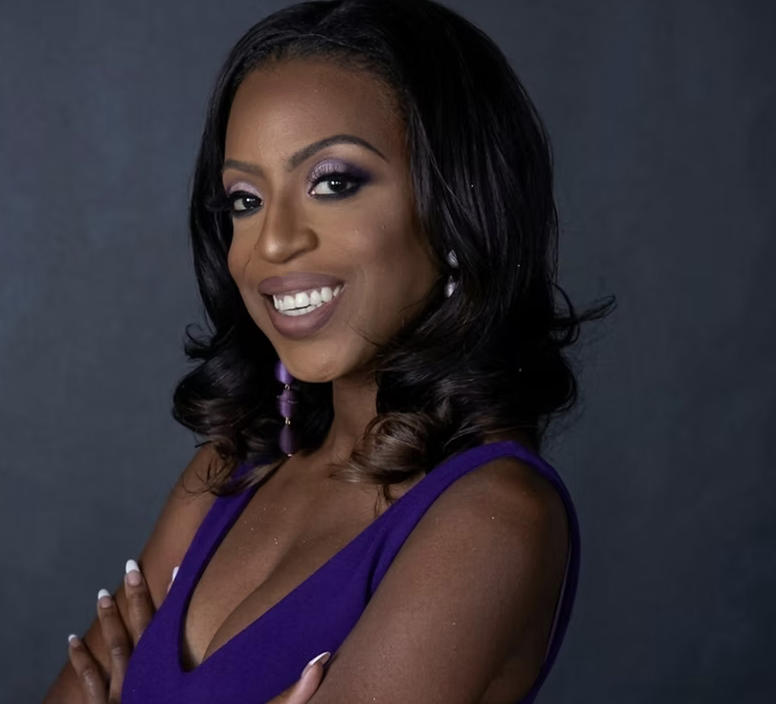
The recent criticism of actor Jasmine Guy presented an uncomfortable discussion point about aging. Guy, 64, recently became the subject of online commentary about her appearance following her return as Whitley Gilbert in Netflix’s “A Different World” sequel. The conversation prompted the actor to address the scrutiny on social media.
“The internet can be brutal to women as we grow older. It asks us to celebrate life while criticizing every sign that we’ve lived it,” she wrote on Sept. 28 on her Instagram. “Growing older brings change, and I won’t pretend every change is easy. But beauty, style, and joy don’t have an expiration date. Let’s spend less time judging ourselves and each other, and more time loving each other, making memories, and living the life we’re here to live.”
Her message raises a question that extends beyond television: Have we made looking young a condition of celebrating Black women?
"It's a very consistent and sad response to women who somehow neglect themselves by the act of aging and men who gain experience, wisdom, money and even, in a lot of cases, improved attractiveness,” said Dr. Cheryl Hall-Russell, a Culture & Organizational Management Consultant. “We simply aren’t allowed to age gracefully.”

For many, Guy represents an entire generation of natural Black beauty, pride, and elegance. Black people who attended a historically Black college or university often say they’ve met a Whitley at least once or twice. The original series debuted in 1987.
But the burden of expecting a woman to preserve that chapter in her appearance asks her to carry our nostalgia on her face.
Some women are celebrated because nobody believes their age. Another becomes the subject of speculation because the years are visible. Suddenly, women of the same generation are being measured against one another, with youthfulness treated as the prize.
Experts say that leaves little room for the woman who likes what she sees in the mirror without needing to hear that she looks 20 years younger. And this perspective is not just directed toward women.
Central Florida-based licensed therapist and owner of Mindful Blooms Counseling Adebisi Gbadamosi studies women of color and racial trauma as among her specialties. She said she observed the shift when late actor Chadwick Boseman faced criticism for his declining appearance. Unbeknownst to the masses, Boseman was privately battling with colon cancer, which he passed away from in 2020.
Gbadamosi says the high beauty standards placed on Black women are both systemic and internalized racism.
“It's almost as though signs of aging have become a slight against the way Black people have to present themselves,” says Gbadamosi. “As young girls, we're seen as ‘grown’ entirely too quickly, so it's almost ingrained in us to look and act a certain way.”
Gbadamosi added, “When a Black woman isn't actively counteracting the signs of aging, it's almost as though people are mad at her for not caring as much as she should.”

Communications strategist Quin Brewington was a fan of the original “A Different World” series. She believes the conversation about Guy connects to a bigger issue in the Black community.
“Black women aren’t given enough room to be fully human. To be vulnerable. To be confident in what we know without being called cocky or proud,” says Brewington. “To change without having to explain ourselves. Aging is another place where those expectations show up.”
Brewington, who is also the founder of Sister Lady Girl Consulting, a women's leadership conference for women 40 and over in the Tampa Bay area, says she's never personally experienced public scrutiny but acknowledged that it exists for older women.
“The judgment can be so harsh, and I admire anyone who has to keep showing up under the weight of it,” says Brewington.
“People hurl these criticisms as though we aren’t aware that we’ve aged. We have mirrors. We see the changes. We don’t need strangers announcing them as if they’ve discovered something.”
For Black women, this conversation also deserves space beyond celebrity status. Guy represents the everyday dilemma, whether spoken or non-spoken, Black women face about aging.
Brewington is nearing 60 and says she receives compliments about how good she looks for her age all of the time. But she added that looking young is not something she spends a lot of time thinking about.
“My mother is in her 80s, and people tell her the same thing. I literally got it from my mama,” says Brewington. “The part I question is the, ‘For your age.’ I know people usually mean well, but why does looking good need an age qualifier? I’d like to think I can look my age and look good at the same time.”
Perhaps “Black don’t crack” can remain an affectionate saying without becoming a standard women must uphold. As our grandmothers would say, keep living, ladies.
“At this age, we have so much depth. We have knowledge, perspective, humor, and wisdom that came from actually living. When the conversation stops at our faces or our bodies, people miss all of that,” says Brewington. “I’d love to hear more about what Black women know, what we’re creating, and what we still want for our lives. There’s so much more to ask us than how we’ve managed to look young.”
Both the original and the new “A Different World” are airing on Netflix. The reboot was recently greenlit for a second season shortly after its September 2026 premiere.
Share Your News with Us
To share news with the Power Broker, connect with reachout@powerbrokermagazine.com. To sign up for our twice-weekly e-newsletter, visit www.powerbrokernews.com; and to join our online conversation, subscribe to our YouTube channel at Power Broker Media Group – YouTube.